
November 25, 2025 | Society & Psychology | Pacific Outlier
In the mid-20th century, the existential threats facing humanity were largely theoretical—nuclear winters or distant pandemics. Today, the threat is tangible, incremental, and omnipresent. For the younger cohorts of the American population—specifically Millennials and Generation Z—climate change has transcended physical geography to become a profound psychological crisis.
This phenomenon, now clinically recognized as “eco-anxiety,” is creating a stark schism between generations. While older demographics often view climate change as a policy debate, younger generations experience it as a personal, immediate trauma.
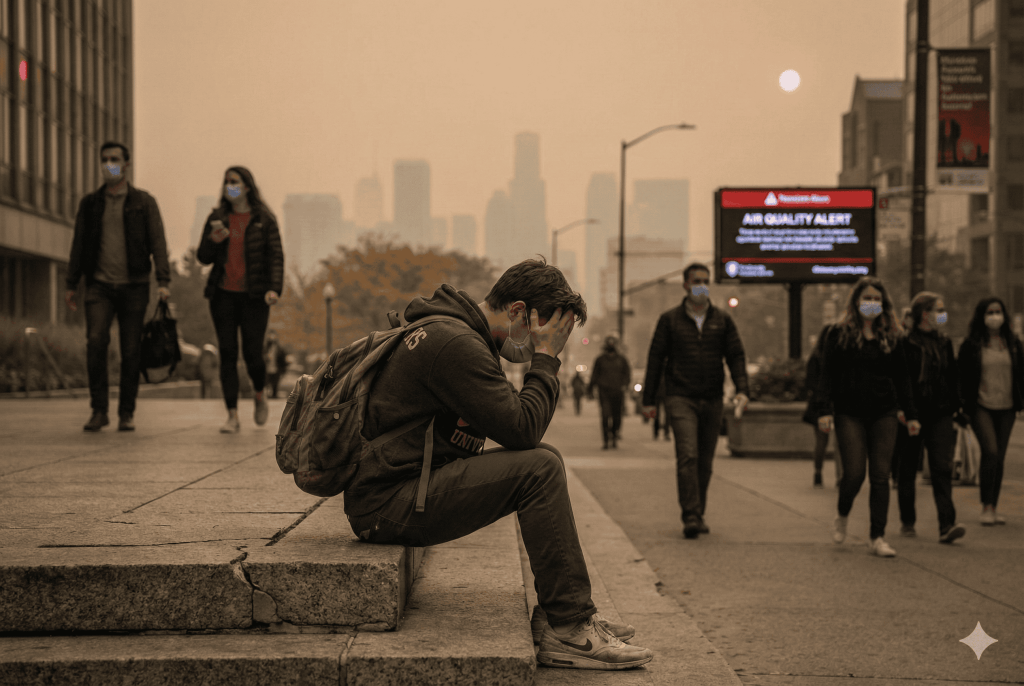
Defining the Crisis: Beyond “Worry”
The American Psychological Association (APA) describes eco-anxiety not as a pathology, but as a “chronic fear of environmental doom.” However, recent data suggests this definition may be too mild for what is currently unfolding.
Unlike generalized anxiety, which often lacks a specific trigger, climate anxiety is rooted in scientific consensus. It is a rational response to reality. For a 22-year-old living in California or Florida, wildfire seasons and hurricane warnings are not news events; they are seasonal markers of survival.
The Statistical Divide: A Tale of Two Realities
The dissonance between generations is quantifiable. According to longitudinal studies conducted between 2023 and 2025, the “worry gap” has widened:
- Baby Boomers: Predominantly view climate change solutions through the lens of economic feasibility and gradual adaptation.
- Gen Z & Millennials: Over 70% report feeling “betrayed” by governments and older generations for failing to act sooner.
This sense of betrayal fosters what psychologists call “moral injury”—the distressing psychological aftermath of witnessing behaviors that violate one’s moral or ethical beliefs.
The “Hidden” Data: What We Don’t Say Aloud
While public polls capture the surface of this anxiety, the depth of the despair is often relegated to private confessions. This is where the psychological burden becomes most visible.
Analysis of anonymous sentiment data reveals a growing trend of “Climate Isolationism.” Young adults are increasingly harboring secrets about their future plans that they feel unable to share with their parents. The most pervasive of these is the hesitation to reproduce.
The term solastalgia—the distress caused by environmental change impacting people while they are directly connected to their home environment—is becoming a defining characteristic of the Gen Z psyche. It is a form of homesickness one feels when one is still at home, but the home is changing beyond recognition.
Economic and Behavioral Consequences
This psychological state is not passive; it is reshaping the US economy and social structure.
- “Climate Quitting”: A 2024 workforce analysis indicated that nearly 40% of Millennial employees have rejected job offers from companies with poor environmental records.
- The Anti-Consumerist Shift: Coping mechanisms are shifting from “retail therapy” to “degrowth.” For many, reducing consumption is the only way to alleviate the guilt associated with their carbon footprint.
- The Savings Paradox: Financial advisors note a nihilistic approach to long-term savings among some Gen Z clients (“Why save for a retirement that might not exist?”), contrasting sharply with the hyper-saving habits of others preparing for resource scarcity.
Echoes of the Future inspire new beginnings. Canada Immigration opens doors to opportunity, helping individuals and families build a brighter tomorrow.

Conclusion: Bridging the Empathy Gap
Addressing the climate crisis requires more than carbon capture technology and renewable energy grids; it demands a bridging of the intergenerational empathy gap. Dismissing the fears of younger generations as “alarmism” invalidates their lived reality.
As we move further into the decade, mental health support must become an integral part of climate adaptation strategies. We must acknowledge that for the youth of today, the forecast isn’t just about the weather—it’s about their survival.
References
- Pew Research Center (2024). Gen Z, Millennials Stand Out for Climate Change Activism, Social Media Engagement. Washington, D.C.
- The Lancet Planetary Health (2023). Climate anxiety in children and young people and their beliefs about government responses to climate change: a global survey.
- American Psychological Association (2024). Mental Health and Our Changing Climate: Impacts, Inequities, Responses.
- Deloitte (2025). The Deloitte Global 2025 Gen Z and Millennial Survey: Economic and Mental Health Trends.
- Hickman, C. et al. (2021). Young people’s voices on climate anxiety, government betrayal and moral injury: a global phenomenon. Nature.
Editorial Note & Disclosure
This article was produced as a collaborative research piece. The psychological analysis and compilation of anonymous sentiment trends were provided by the editorial team at YourSecret.org, utilizing public sociological data and anonymized user insights regarding future anxieties.
Pacific Outlier maintains strict editorial independence. This content is intended for educational purposes and highlights emerging social trends.
 Pacific Outlier -Where science meets mind, technology, and climate.