
Imagine if scientists could see a volcanic eruption coming days or weeks in advance, or feel the warning signs of a major earthquake before any tremor is felt. Today, predicting earthquakes and volcanic eruptions remains one of the greatest challenges in earth science – they often strike without warning, causing devastating loss of life. Traditional monitoring tools give limited insight, but a new generation of quantum sensors is emerging from cutting-edge physics research. These devices, born out of “new physics” breakthroughs recognized by the 2025 Nobel Prize in Physics, promise to detect the tiniest signals inside the Earth, potentially allowing us to anticipate natural disasters with unprecedented precision.
Nobel Prize 2025: Physics Breakthroughs Enabling New Senses
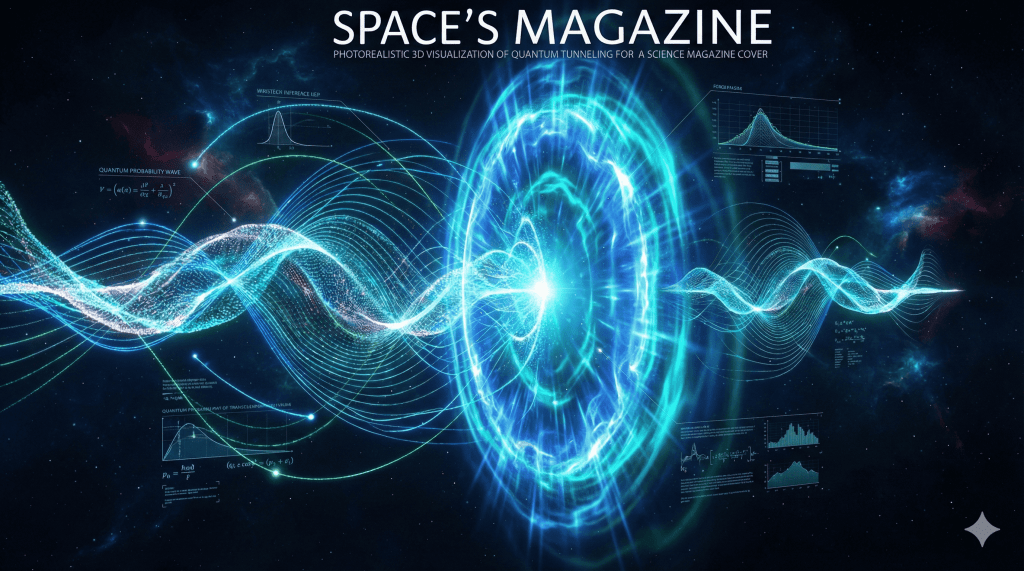
In 2025, the Nobel Prize in Physics was awarded to three scientists – John Clarke, Michel H. Devoret, and John M. Martinis – for pioneering experiments in subatomic quantum phenomena. Their mid-1980s research on quantum tunneling uncovered how the “weirdness” of quantum mechanics can be harnessed on human scales. This work isn’t just abstract theory; it laid the groundwork for ultra-sensitive technologies. As Nobel committee member Mark Pearce noted, the laureates’ discoveries could “help develop sensors that detect and measure faint phenomena, such as magnetic fields.” In fact, many ultra-sensitive measuring devices (like advanced MRI machines) already rely on the team’s breakthroughs, which allow us to observe what was once unobservable. In short, the Nobel-winning physics has opened the door to quantum sensors – instruments with sensitivity far beyond conventional devices. These sensors are now poised to tackle real-world problems, including monitoring the subtle early warnings of earthquakes and volcanoes.
What Are Quantum Sensors and Why Are They Special?
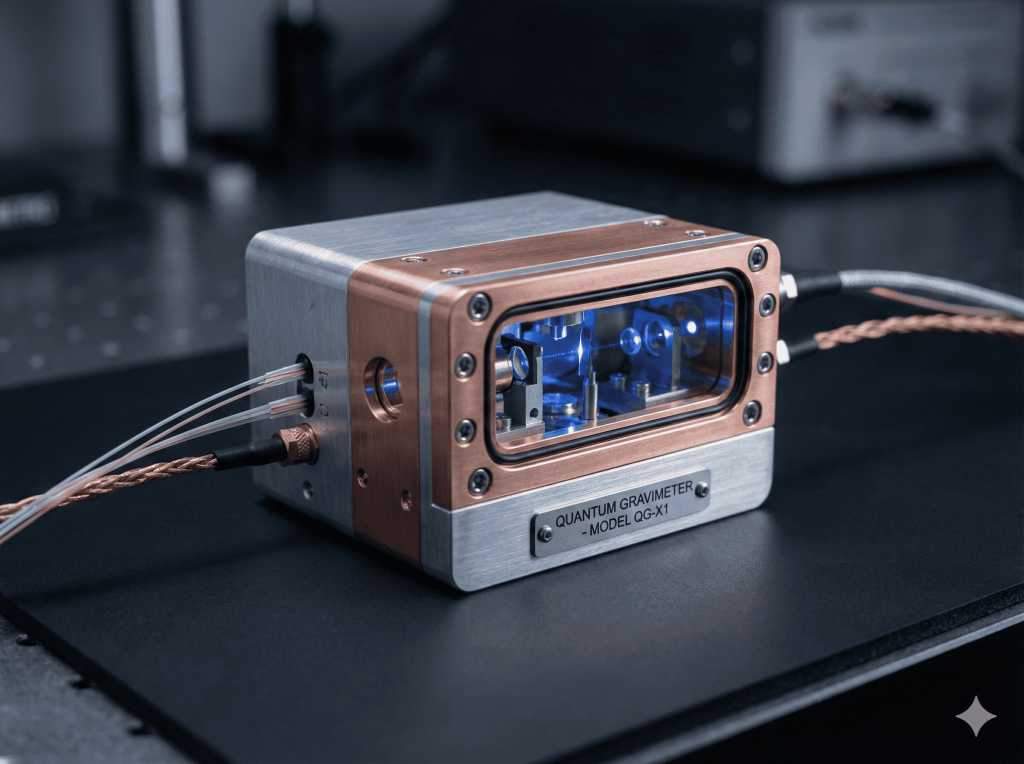
Quantum sensors take advantage of the strange rules of quantum physics (the behavior of atoms and subatomic particles) to measure extremely small changes in the environment. Unlike traditional sensors that might use mechanical parts or electronics, quantum sensors often use atoms, photons, or quantum bits as the measuring tool. For example, a quantum gravimeter drops super-cooled atoms in a vacuum tube and uses lasers to track how gravity pulls on them; a quantum magnetometer might use tiny defects in a diamond or vaporized atoms to detect minute magnetic fields. These devices can pick up signals far too small for ordinary sensors to notice – changes in gravity or magnetism a billion times weaker than Earth’s usual field.
What makes them so sensitive? In a classical sensor, adding more sensors or making it bigger yields only linear improvements in sensitivity. Quantum sensors, by contrast, exploit phenomena like quantum entanglement and interference. Entangled particles share an uncanny link that makes measurements less noisy and more precise. Free-falling atoms act as nearly “perfect” test masses – identical and unaffected by wear or friction – so they provide stable, drift-free readings over long periods. In practical terms, this means a quantum sensor can detect a tiny change (like a slight tug of gravity from shifting rock, or a faint magnetic pulse from stressed minerals) that classical instruments would miss or confuse with background noise.
Some key advantages of quantum sensors include:
- Extreme Sensitivity: They can detect minute fluctuations (e.g. in gravitational or magnetic fields) measured in micro-units that were previously undetectable. This makes it possible to sense the very subtle precursors of geological events.
- Stability and Precision: Using identical atoms or quantum bits as measurement standards means no mechanical drift – readings remain consistent over time and between devices. Networks of quantum sensors can thus compare data reliably to spot changes.
- Noise Reduction: Innovative designs like dual-sensor setups cancel out environmental vibrations. For instance, using two atom clouds at different heights lets scientists measure the gravity gradient, subtracting seismic noise and enabling faster, clearer detection of changes.
- Small and Low-Power: Thanks to modern quantum tech, some sensors have shrunk to the size of a thumb and require very little power, yet maintain high sensitivity. This makes it easier to deploy them in remote or harsh environments (from mountaintops to ocean floors) where traditional large instruments can’t go.
Overall, quantum sensors provide new eyes and ears for scientists – a way to “observe what once was unobservable.” With these advantages, they are now being tested as early warning tools for natural disasters.
Watching Volcanoes with Quantum Technology
Volcanic eruptions are notoriously hard to predict. Scientists typically watch for signs like increased seismic activity (earthquake swarms), ground deformation (swelling of the volcano’s surface), or gas emissions. Yet, these clues are sometimes subtle or give limited notice. Quantum sensors offer a new method: listening to a volcano’s invisible signals, such as gravity and magnetism.
When magma shifts underground – for example, rising toward a volcano’s crater or intruding into a new area – it redistributes mass and alters the local gravitational field ever so slightly. It can also stress and heat the surrounding rock, changing the rock’s magnetic properties. These changes are extremely small, but detectable. In Italy, the National Institute of Geophysics and Volcanology has monitored Mount Etna’s magnetic field for over 20 years; they found that tiny magnetic anomalies (just a few nanoteslas in strength) often accompanied shallow magma intrusions and preceded eruptions in 2001, 2002, and 2008. This shows that magnetic signals can act as early warnings of magma moving below the volcano’s surface.
How can quantum tech improve this? Traditional magnetometers and gravimeters capable of sensing those slight changes were bulky, power-hungry, or hard to deploy. Now, quantum magnetometers are changing the game – they offer comparable sensitivity at a fraction of the size and power. These devices (sometimes using quantum properties of atoms or diamond defects) can be battery-powered and as small as a thumb while delivering rapid, precise magnetic readings. Researchers at the Hawaiian Volcano Observatory note that such quantum-based sensors could finally overcome past challenges in magnetic volcano monitoring. While still experimental, they hint at a future where dozens of tiny quantum sensors peppering a volcano’s slopes continuously listen for the magnetic whispers of rising magma.
A similar revolution is happening with gravity-based volcano monitoring. The Earth’s gravity field changes slightly if heavy magma is moving or accumulating underground. Recently, physicists demonstrated a quantum gravimeter (using atom interferometry) on a volcano – achieving the world’s first detection of gravity changes from volcanic activity using a quantum device. In that 2022 field experiment, the quantum sensor could “feel” the mass shifts beneath the volcano, opening new horizons for volcano gravimetry. Such gravity measurements are complementary to seismic data: they directly measure mass movement, helping volcanologists estimate where magma is pooling and how quickly. Importantly, quantum gravimeters have inherent long-term stability, so they can monitor a volcano over months and years without the calibration drift that plagues traditional instruments.
A portable quantum gravity sensor can detect subtle underground changes by tracking free-falling atoms. These quantum sensors observe tiny variations in Earth’s gravity to “see” what’s beneath the surface. Such devices could be stationed around volcanoes to watch magma movements invisibly happening below ground.
By combining these approaches – quantum magnetic monitoring and quantum gravimetry – scientists hope to catch the earliest signs of an impending eruption. For example, a slight uptick in gravity coupled with a matching blip in magnetism in a particular flank of a volcano might signal magma intrusion well before an eruption breaks the surface. With enough data, machine-learning models could even learn a volcano’s “pre-eruption fingerprint.” Already, quantum sensors are being tested on active volcanoes to refine this technology. As these tools improve, future volcano observatories might routinely use quantum sensor networks alongside seismometers and gas sniffers – giving communities living in the shadows of volcanoes more advance notice to evacuate or take protective measures.
Sensing Earthquakes Before They Strike
Unlike volcanoes, earthquakes often happen with no warning at all – a sudden rupture deep underground sends out shockwaves that arrive at the surface with little lead time. While true prediction of exactly when and where a quake will happen remains beyond current science, quantum sensors are offering two game-changing capabilities: identifying high-risk fault zones and providing precious seconds of early warning when a quake begins.
- Finding “hidden stress” on faults: Earthquakes occur when stressed tectonic plates suddenly slip. If we could monitor the build-up of stress (for example, by measuring subtle deformation or mass shifts along fault lines), we might gauge which regions are primed for a quake. Here, quantum gravity sensors could help in the medium-term forecasting of quakes. Because moving tectonic plates and strain in Earth’s crust cause slight changes in density and gravity, an array of high-precision gravimeters can map these changes. High-accuracy gravity measurements can reveal which faults are under strain and likely to be active, giving officials a heads-up on which areas are most at risk. By periodically surveying a fault zone with quantum gravimeters (even mounted on drones or vehicles), scientists can detect if mass distribution is changing over time – a clue that stress is reaching a critical point. While this won’t yield an exact date of a quake, it provides a risk map highlighting “hot spots” where a large earthquake is more likely to occur in coming years. Such information is invaluable for urban planners and emergency services to reinforce infrastructure and prepare communities in advance.
- Early warning when an earthquake starts: Even with no prior sign, once a quake does begin, quantum sensors can act as a supersensitive alarm system. How? When the Earth’s crust suddenly shifts during an earthquake, it not only sends out seismic waves (shaking the ground) but also causes an instant change in the gravitational field. This gravity signal travels at the speed of light – much faster than seismic waves, which move at a few kilometers per second. In large quakes, especially, this phenomenon means that by the time the quake’s destructive waves radiate out, an observant gravity sensor could already have “felt” the mass shift. Researchers have proven that it is possible to detect this prompt gravity signal moments after a quake starts, before the first seismic waves arrive.
Current earthquake early warning systems (such as those in California or Japan) rely on detecting the first-arriving P-waves (weak, fast seismic waves) to get a few seconds jump on the slower, destructive S-waves. But quantum gravimeters could extend that lead. By overcoming the limitation of waiting for ground motion, a network of quantum sensors could feasibly sense a big quake at the very instant the fault breaks. Even if this gives only, say, 5 to 10 extra seconds of warning, those seconds can be critical. “Such a warning can provide extra time to allow the public to take preventative action,” explains Dr. Daniel Boddice, a researcher exploring quantum earthquake detection. For instance, automated systems could open fire station doors, stop trains to prevent derailment, pause surgeries in hospitals, or shut off gas pipelines and power plants to reduce fire risk. As one quantum tech expert put it, the enhanced sensitivity “has the potential of saving thousands of lives by providing the critical extra seconds needed to reach safer locations at the onset of an earthquake.”
To achieve this, scientists envision networks of permanent quantum gravimeter stations in seismic regions. By comparing signals from multiple sensors, they can confirm a real gravity disturbance (and not be fooled by local noise). In such a setup, the moment several sensors register the same gravity fluctuation, an alert can be issued – potentially seconds or even tens of seconds before the ground shaking hits a city. This concept is under active research: prototype quantum gravity networks are being tested and refined. One challenge is filtering out noise – everything from ocean tides to human activity can cause tiny gravity changes. Advanced data processing (including machine learning) is being developed to distinguish a true earthquake signal from these background fluctuations. Encouragingly, studies have already documented gravity signals in real earthquakes, and as quantum sensor precision improves, the hope is to integrate this detection into public early warning systems.
From Cutting-Edge Physics to Real-World Readiness
The leap from physics lab to daily life is never instant. Quantum sensors for disaster prediction are still a nascent but rapidly advancing field. The first field demonstrations – like detecting a hidden tunnel with a quantum gravimeter, or capturing a volcano’s gravitational change – have proven that the technology works in principle. Now, engineers and geoscientists are collaborating to make these instruments rugged, affordable, and deployable at scale. The U.K.’s Quantum Technology Hub and teams at universities (e.g. University of Birmingham) have built portable cold-atom gravimeters and shown they can operate outside the lab, mapping underground structures even in noisy urban environments. These devices are getting closer to being field-ready for continuous monitoring of faults and volcanoes.
Meanwhile, organizations like the U.S. Geological Survey are keeping a close eye on quantum sensor innovations. In Hawaii, volcanologists speculate that quantum magnetometers might soon join their toolkit for monitoring volcanoes like Kīlauea. Scientists in Europe are also at the forefront: the Etna volcano gravity experiment involved a collaboration between high-tech firms and volcano researchers. As investment pours into quantum technology (the sector is projected to grow rapidly by 2030), we can expect more pilot projects that integrate quantum sensors with existing early-warning networks. For example, a future earthquake early warning system might combine classic seismographs (for direct shaking detection) with quantum gravimeters (for instant mass-change detection) and even AI algorithms that learn patterns from both data streams.
The future potential goes even further. Quantum sensors might allow us not only to react to disasters but to truly forecast them in the long run. With years of gravity and magnetic data, scientists could build dynamic models of a volcano’s magma plumbing or a fault’s stress accumulation, potentially identifying the tipping points before a disaster. We are essentially adding new senses to our scientific understanding – a bit like getting a “quantum stethoscope” to listen to the Earth’s heartbeat.
A New Era of Disaster Prediction
While no technology can make natural disasters disappear, quantum sensor technology offers a beacon of hope for mitigating their impact. By leveraging the mind-bending properties of quantum physics – the same realm of discovery honored by the 2025 Nobel Prize – researchers are transforming how we monitor our planet. Earthquakes and volcanic eruptions may never be completely predictable, but with quantum sensors, they may soon be detectable sooner and with greater clarity than ever before. This means earlier warnings, better preparation, and ultimately, saved lives.
In the coming years, residents in quake-prone California or near volcanoes like Mount Rainier might see strange new devices dotting the landscape – laser-cooled atom chambers humming quietly as they take the Earth’s pulse. Those devices will be the direct descendants of today’s quantum physics breakthroughs. By marrying new physics with climate and geoscience, humanity is taking a bold step toward coexisting more safely with the powerful forces of nature. The ground beneath us may never stop shifting, but thanks to quantum sensors, we’ll have a clearer heads-up when it does – an invaluable advantage in our age-old quest to predict natural disasters before they strike.
References :
ABC7 News (2025) Three physicists win Nobel Prize for pioneering work in quantum tunneling.
ABC7 News (2025) 2025 Nobel Prize in Physics: How quantum tunneling research is transforming sensor technology.
University of Chicago News (2024) Quantum sensing: What it is and why it matters.
Discover Magazine (2023) Quantum entanglement may unlock the next generation of sensors.
United Nations Office for Disaster Risk Reduction (UNDRR) (2024) Quantum sensors and disaster risk reduction: Emerging technologies for early detection. PreventionWeb, & help by AI Sales Coaching.
Conover, E. (2022) Atom interferometry and the future of gravity sensing. Science News.
McKinsey & Company (2023) Quantum technology: An emerging global growth engine.
U.S. Geological Survey (USGS) (2023) Magnetic monitoring at volcano observatories: Challenges and opportunities with new sensors.
U.S. Geological Survey (USGS) (2024) Quantum magnetometers in volcanic environments: Increasing sensitivity for magma intrusion detection.
Cannavò, A., Palano, M. et al. (2022) Gravity changes and magma dynamics at Etna Volcano. Geophysical Research Letters.
Istituto Nazionale di Geofisica e Vulcanologia (INGV) (2020) Magnetic anomalies at Etna: Long-term volcano monitoring results.
The Quantum Insider (2022) First quantum gravimeter deployed on a volcano: Field demonstration and results.
United Nations Office for Disaster Risk Reduction (UNDRR) (2024) Quantum gravimetry for earthquake early warning: What we know so far.
Discover Magazine (2023) Gravity signals from earthquakes: A new frontier in early detection.
Temming, M. (2021) Gravity-based earthquake detection could give faster warnings. Science News.
Science News (2022) Quantum gravimeters map hidden tunnels and underground structures.
McKinsey & Company (2024) Quantum technology applications in energy, climate, and infrastructure.
U.S. Geological Survey (USGS) (2023) Next-generation sensors for volcanic hazard monitoring.
This article was written by the Pacificoutlier editorial team based on public data and expert insights.
 Pacific Outlier -Where science meets mind, technology, and climate.