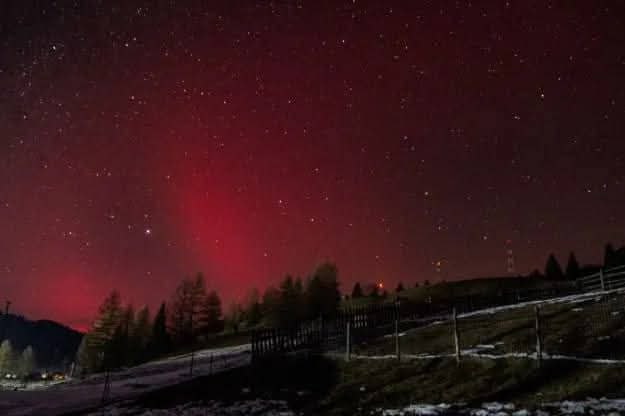
Auroras Beyond the Poles: A Beacon of Beauty or a Warning of Change?
Introduction
Auroras, ethereal displays of light that have historically graced only the polar skies, are increasingly visible in lower latitudes. While many celebrate these phenomena as rare and mesmerizing spectacles, their growing prevalence may signal profound and troubling shifts in Earth’s magnetic and atmospheric systems. Beyond the wonder, auroras in atypical regions might serve as harbingers of impending environmental crises. In this article, we explore the causes, implications, and potential future scenarios of these luminous occurrences.
The Science Behind Auroras
Auroras occur when charged particles from the Sun interact with Earth’s magnetosphere and atmosphere. This delicate interplay, producing vibrant hues of green, red, and purple, is usually confined to the poles due to the shape of Earth’s magnetic field. However, the increasing frequency of auroras in lower latitudes indicates shifts in these magnetic protections, which could stem from heightened solar activity or the weakening of Earth’s magnetic field.
The Warning Signs in the Lights
1. Diminishing Magnetic Shield
Earth’s magnetic field acts as a shield, deflecting harmful solar radiation. Evidence suggests it is weakening, a phenomenon linked to geomagnetic reversals that occur over millennia. The visibility of auroras in non-polar regions could signify an acceleration of this process, exposing the planet to heightened radiation risks.
2. Intensifying Solar Activity
The Sun is entering a period of increased activity within its 11-year solar cycle. Solar flares and coronal mass ejections send torrents of charged particles toward Earth. While auroras are a visual delight, the same solar storms disrupt satellites, power grids, and communication systems, highlighting the fragility of human infrastructure.
Climatic and Geological Ramifications
1. Amplified Climate Change
The weakening of Earth’s magnetosphere could make the atmosphere more vulnerable to solar winds, hastening the depletion of the ozone layer. This exposure accelerates global warming and alters climatic patterns, potentially leading to extreme weather events.
2. Geological Instability
Solar activity affects not just the atmosphere but also Earth’s core and tectonic systems. The weakening of the magnetic field can influence magma dynamics, increasing volcanic activity and seismic events. A rise in tectonic instability could compound the environmental and societal challenges humanity faces.
Socioeconomic Consequences
1. Infrastructure Vulnerabilities
Geomagnetic storms can disable energy grids, GPS systems, and internet infrastructure. These disruptions could lead to cascading failures in logistics, finance, and emergency services.
2. Population Displacement
As regions become less habitable due to climatic or geological changes, populations will be forced to migrate. Climate refugees will exacerbate geopolitical tensions, creating economic and social strain on host countries.
What Lies Beyond 2050?
If current trends persist, the post-2050 world may bear little resemblance to our current environment. The potential outcomes include:
- Global Power Failures: Increasingly frequent geomagnetic storms could render large portions of the globe technologically paralyzed.
- A Drastic Climatic Shift: The erosion of atmospheric protections may lead to uninhabitable zones, particularly in equatorial regions.
- Civilizational Decline: Without coordinated efforts to mitigate these challenges, societal and technological regression could occur, reminiscent of the pre-industrial era.
Conclusion
The growing visibility of auroras in lower latitudes is a powerful reminder of the interconnectedness of Earth’s systems. These celestial lights, while breathtaking, symbolize deeper disruptions in the planet’s magnetic and climatic equilibrium. Humanity faces a choice: to remain passive spectators of these changes or to act decisively in preserving Earth’s environmental and technological stability. As we marvel at the “dancing lights,” let them also illuminate the urgency of our responsibility to safeguard the planet for future generations.
 Pacific Outlier -Where science meets mind, technology, and climate.